Monday, 8 April 2013

How to move GPS signals inside and why bother?


If you have ever used a GPS-enabled device, you will have encountered the scenario that location-based services using GPS tend not to work inside buildings. For the individual user that might not pose too much of a problem, but there are certain environments where having a GPS signal indoors would be extremely helpful.

Examples include the following (though this is by no means an exhaustive list):
·          
  • Electronic manufacturing and test laboratories: perform all GPS receiver tasks indoors.
  •  Any equipment that has a GPS receiver within that needs to be built, tested, calibrated or repaired at certain stages of its life-cycle. It would be helpful if the manufacturing, testing, calibration, repair and operation of GPS-enabled equipment could be carried out indoors, instead of stepping outside or hanging by fingernails out of the nearest window! It has been known for each bench, area or department within a facility to have its own outdoor GPS antenna and feeder cable.
  • Fire stations: on-board command and control equipment maintain contact with satellites while safely locked up in the station, so there is no need for an agonising wait for satellite acquisition upon exiting the station during a callout.
  • Retail outlets: provide GPS signal in the store so that technology can be demonstrated with live satellite signals - think of the array of satnav systems in your local electrical store that display a message that says "signal lost 5 days, 24 hours, 12 minutes and 8 seconds ago".
  • Vehicle manufacturing plants: on-board GPS systems can be tested indoors - no need to sit outside waiting for the satnav systems to acquire a satellite fix.
  • Aircraft servicing hangars: it may be inconvenient to take a smartphone outside to test the GPS functionality, but it's even harder to push an Airbus jet out of the hangar.
Thanks to recent changes in licensing policy in the UK and the new “light licensing” approach, GPS repeaters can now be deployed to address in-building GPS requirements and as such, the list of applications for GPS repeater technology is not quite endless, but it is ever-increasing.

A repeater offers an easier, more convenient, less time-consuming way to work with a wide range of GPS-enabled systems, but what does a GPS repeater system consist of?

In general terms, a repeater is a device that relays GPS signals to any indoor location that isn't normally reachable and will typically include the following components:

  • Outdoor GPS antenna
  • Antenna mounting bracket
  • Coaxial feeder cable
  • Indoor GPS repeater unit
  • AC/DC power adapter
The outdoor antenna should be installed in a location where it has a good view of the sky, preferably at or above roof level, in order to pick up signals from as many satellites as possible. The Outdoor antenna can vary – from medium gain to high gain units – take a look at the GPS-TMG antenna range as examples of quality GPS antennas for fixed applications. These GPS antennas are designed for precision performance and are used not only in GPS repeater systems, but also in timing and synchronisation applications.
The received satellite signal travels down the coaxial cable and into the repeater unit, which in turn boosts the signal and transmits it to the indoor space

In terms of coaxial cable to be used, this would depend on the gain of the outdoor antenna and the length of cable required from the outdoor antenna to the repeater. Typical examples of coaxial cable for these applications include BWL195 and BWL400 low loss RF cables. The cables can be pre-terminated and customised for each application. For extremely long cable runs (underground installations, mines etc.), then the coaxial cable can be replaced by Fibre Optics due to the extremely low latency of Fibre. For more information on GPS repeaters using Fibre links, please contact Phil at FaltchGPS.

The indoor repeater unit has an internal re-radiating antenna that emits signals in a beam approximately 140 degrees wide, giving a coverage radius of up to 18 metres. A good example of fully approved GPS repeater can be found here.

If one repeater unit isn't enough to cover the required area, extra repeaters connected together by a signal splitter can be connected together to increase the effective coverage area up to a nominal 60M by 60M (depending on the shape and layout of the space).

Overall, the major benefit of this technology is that a GPS signal can now be accessed where previously it couldn’t be, making applications more efficient and more reliable for organisations ranging from electronics manufacturers to emergency services. Using high gain outdoor GPS antennas, quality low loss cables and GPS repeater technology, many organisations can now take advantage of cost-effective solutions to solve GPS voids indoors.

For more information GPS antenna products, feel free to take a look at the offering from SAS. For fully custom GPS repeater solutions, please visit Faltech GPS.

A big thank you to Phil at FaltechGPS  for assistance with the content on this post.

Wednesday, 3 April 2013

High Performance Multi-Band Mobile MIMO Antenna for professional WLAN applications

The new PCTHP-MIMO antenna offers multi-band coverage of 2.3-2.8 GHz and 4.9-5.9 GHz broadband wireless frequencies.  Its three-port dual band integrated elements are terminated with high performance, low loss RG-58/U stranded cable. Mounting via a metal 3/4-inch stud mount with slotted jam nut, the antenna provides a single cable exit for easier installation and/or antenna replacement.


PCTHP-MIMO 2.4/5GHz Mobile Antenna

Environmentally, the IP67 compliant design with custom overmolded gasket provides maximum protection against water or dust ingress under severe environmental conditions when properly installed on a vehicle's surface making an ideal solution for professional mobile applications requiring MIMO WLAN access. The radome is UV resistant and can be supplied in black or white.

For more information, please contact us.

New MIMO 2.4 Omni antennas from PCTEL

PCTEL has recently introduced a range of dual band (2.4 and 5 GHz) MIMO omnidirectional antennas. These antennas are designed for outdoor or indoor installation and support MIMO radios from any vendor


MPMI 2.4/5 GHZ MIMO OMNI ANTENNA

The main features of the MPMI antennas are:

•    Each port is dual band 2.4/5GHz, regardless of location
•    Support 3 port, 4 port or 6 port 802.11n radios (Cisco, Aruba, Motorola Solutions, HP, etc.)
•    Designed for outdoor installations, but hardware for ceiling mount indoor installations is also included
•    Plenum rated cable and UL 94V0 materials
•    OEM grade, optimized radiation patterns for optimal MIMO performance
•    Offered with RP TNC or RP SMA depending on the model, but other connector options available

The antennas offer the ultimate in flexibility when deploying indoor wireless applications using 2.4 or 5 GHz bands. Offering superior RF performance and rugged build quality, the MPMI antennas are ideal for demanding WiFi and wireless LAN applications.

Please contact us for more information and availability.

Wednesday, 20 March 2013

Tamperproof 169 MHz antennas keep AMR applications running

In a previous blog entry, I have discussed how due the size of the wavelength at 169 MHz, it is incredibly difficult to design an embedded antenna with any reasonable performance (actually yesterday I saw an "embedded" 169 MHz antenna with an incredible -17 dBi gain - yes minus 17 dBi!!!), so typically customers are looking at options to externally mount 169 MHz antennas as this is the only reasonable way to go.

From standard product portfolios, these will typcially include connector mounted helical antennas such as the H169-SMA antenna or wall-mounted omni antennas such as the WMO-169-WMB. The drawback with both antennas are connected to the radio or terminal via a coaxial cable or connector that may be easily unscrewed should somebody wish to detatch the antenna. If the antenna is not secured in any way, it does leave the application open to be tampered with, damaged or vandalised all via the external antenna.

One solution is to consider a permanent-mount through-hole 169 MHz antenna solution, where the 169 MHz antenna is permanently attached to the terminal via an integrated stud and secured with a washer/nut on the underside of the enclosure. In these cases, the antenna should be custom-tuned to the application as a groundplane is still required and groundplane sizes vary from product to product. An example of this permanent mount antenna is the WCO-169 antenna:

WCO-169 antenna with N-Female (through-hole) connector
With an O-Ring in the base of the antenna body which forms a waterproof seal against the enclosure, the WCO-169 is a robust, discrete and secure method of mounting an external 169 MHz antenna.

If you are interested in looking more closely at the WCO-169 and the possibility to tune the antenna to your application, please feel free to contact us at sales@ead-ltd.com. The H169-SMA and the WMO-169-WMB antennas are in stock and can be purchased via our webshop at www.connextech.co.uk.


Tuesday, 12 March 2013

4G Window Mount MIMO antenna now in stock

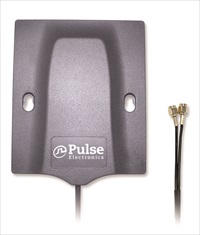
The WA700/2700 4G (with fallback to 3G and 2G) Window Mount MIMO omni antenna is now in stock. This antenna is ideal for mobile applications where permanent mount or magnetic mount antennas are unsuitable. It can be mounted on a window of vehicle, boat, narrowboat, camper or caravan to provide an improved MIMO 4G connection. Supplied with sturdy suction cups, the WA700/2700 can be installed and removed as required for a truly mobile MIMO antenna solution.

WA700/2700 4G Window Mount MIMO Antenna


For more product information, please visit our Specialist Antennas product page here.

Alternatively the WA700/2700 antenna be purchased via our Connex Webshop.

Wednesday, 6 March 2013

Broadband internet access on the move - how to stay connected with the right antenna...


High speed internet access on the move is becoming ever more a necessity as people wish to stay connected to family and friends, conduct business as well as needing to access information about local services. In mobile leisure applications, internet  access is increasingly important to the owners of boats, narrowboats and caravans, but due to the transient nature of the application having fixed line access or fixed wireless access is not appropriate, so owners have to turn to wireless services

There are a number of methods of wireless access, but 3G and 4G services are increasingly popular due to ever higher download speeds on offer. With a new generation of routers or personal hotspots, users can use 3G or 4G wireless to access the network and use WIFI capabilities to distribute the internet to devices on the boat or in the caravan. However, when parked or moored up in more remote areas or in weak signal areas, embedded antennas or simple "rubber duck" type antennas as supplied with the router or modem hardware might not be enough to establish a reliable 4G network connection. Therefore it makes sense to use a high quality 3G/4G antenna to connect to the network.

There are a variety of 3G/4G antenna options from mobile to magnetic, from permanent mount small or low profile antennas to high gain antennas for wall or pole mount. Which antenna to choose and how to use them can be daunting for the uninitiated! I'll try to help with a few pointers.....

Firstly, you need to understand your router, modem or dongle device. Many will have one or two antenna connectors, and you will need to establish what type of connector this is. Common connectors include SMA, TS9 and CRC9, but there are many others. If your device has two antenna connectors, it is handy to know if the device has diversity or MIMO (multiple in multiple out) options - in simple terms sometimes using two antenna ports with 2 antennas (or a single MIMO antenna - it should have 2 antenna cables and connectors) will improve the download speed.
Once you have established your antenna connector, it is time to figure out your antenna mounting options.

Mobile antennas - Typically there are two ways to use a mobile antenna - either laptop-mount or window mount. For laptop mount, there is typically a plastic hook supplied with the antenna that can slide over the lid of the laptop and the mobile antenna can be mounted onto the hook.  Alternatively the antenna can be window-mounted with suction cups and then the antenna cable(s) can be routed back to the modem or router. See the WA_700_2700 as a good example of 4G 3G 2G (supports all bands) mobile MIMO antenna for laptop or window mount.

Magnetic antennas - There are usually two options for magnetic mount antennas. Low cost rubber style magnetic antennas like the Pentamag antenna (3G and GSM only) or full-on rugged, robust low profile antennas such as the LTE-HIGAIN-MAG (4G with fall back to 3G and 2G). Typically they have one cable and connector to connect up to the antenna port on the modem or router and are mounted outside the vehicle, boat or portacabin and mounted onto metal surface. So with the magnetic antenna’s gain and new location you are able to pick up a signal and through the cable route this down to the modem or router - for example, in a narrowboat the router is inside without signal and the magnetic antenna is outside picking up a 4G signal. A magnetic antenna is perfect when you do not want a permanent antenna installation (i.e wall-mount or stud-mount  i.e. drilling a hole through the skin of vehicle or boat) and would like to move the antenna around or remove it to avoid damage or vandalism. Bear in mind magnetic antennas are ideally mounted onto a conductive metal surface as they need the metal surface in order to radiate properly.

High gain antennas for Wall or Pole mount - there are number of high gain outdoor antenna options open to 4G users - high gain omni-directional (they radiate in every direction pretty much equally) antennas or high gain directional (work in one direction only similar to traditional house mounted TV antennas). High gain antennas can be wall or pole mounted, some can be both. What they offer is higher performance in terms of receiving the signal and then they pass this signal along a low loss cable to the modem or router. A fine example of a high gain omni antenna for wall or pole mount is the FGO antenna. This offers up to 5 dBi gain for 4G, 3G and 2G frequencies. A directional antenna will offer more gain than an omni, but is a bit more restrictive as you have to point it at the local 4G mast, but you will benefit from an increased gain of perhaps 9 dBi or 10 dBi - an example of this is the LPP7270 pole-mount antenna. In mobile applications, wall-mount antennas are not ideal, but it is possible to fabricate a temporary bracket on which mount a wall-mount antenna if pole-mounting a high gain antenna is not suitable.

Now we have understood the mounting options, there are always other considerations, some of these are:

Long cables = higher signal loss - unless you are using very thick low loss cable then as a rule of thumb, the longer the coaxial cable, the more signal loss (or attenuation) you are likely to get reducing the usable signal strength received at the modem or router and thereby impacting your download speed. In an ideal world, cable lengths should be no longer than really necessary.

Nearby objects - If possible try to mount your antenna away from large objects or obstructions and most importantly from any protruding metal surfaces (the metal surface on magnetic antennas are mounted excepted of course). Obstructions and metal objects close to the radiating element of the antenna can impact the propagation properties of the antenna and adversely affect antenna performance and in turn hinder download speeds.

Elevation - in many cases the higher up the antenna is mounted the better chances of signal reception - so do bear this mind when window-mounting or choosing a metal surface for the magnetic antenna. Needless to say, the better signal you get the better download speed is possible.

Antenna and Cable Quality – remember not all antennas are made equal and this can have an impact on your download speeds. Spurious claims about antenna gain are prevalent in the market so it is advisable to make sure that antenna you are purchasing is from a reputable manufacturer and vendor. Likewise choosing a quality cable such as BWL195 or BWL400 from a quality cable manufacturer should ensure that cable losses are minimised.

For a portfolio of 4G antennas, please visit our websites at EAD, SAS and Connex. A selection of these antennas can be purchased directly from our webshop at the Connex site.

Friday, 1 March 2013

4G MIMO on the move - the WA700/2700 keeps you connected

A new multiband mobile antenna for laptop or window mount has been release and will shortly be available at the Connex webshop. The WA700/2700 covers 4G, LTE, 3G and GSM frequency bands and has 2 x cable/connectors to connect to modems or routers with MIMO capability. Ideal for mobile applications for 4G routers or modems with 2 antenna ports, the WA700/2700 is supplied with suctions cups for window mounting. Initially, the antenna will be available with dual SMA or dual TS9 connectors.

WA700/2700 4G multiband mobile antenna
 The antenna augments our growing offering of 4G antenna products including magnetic antennas, panel antennas, omni antennas and mobile antennas.

For more information, visit our webshop on 4G antennas or visit www.ead-ltd.com or www.specialistantennas.co.uk for further product information.